
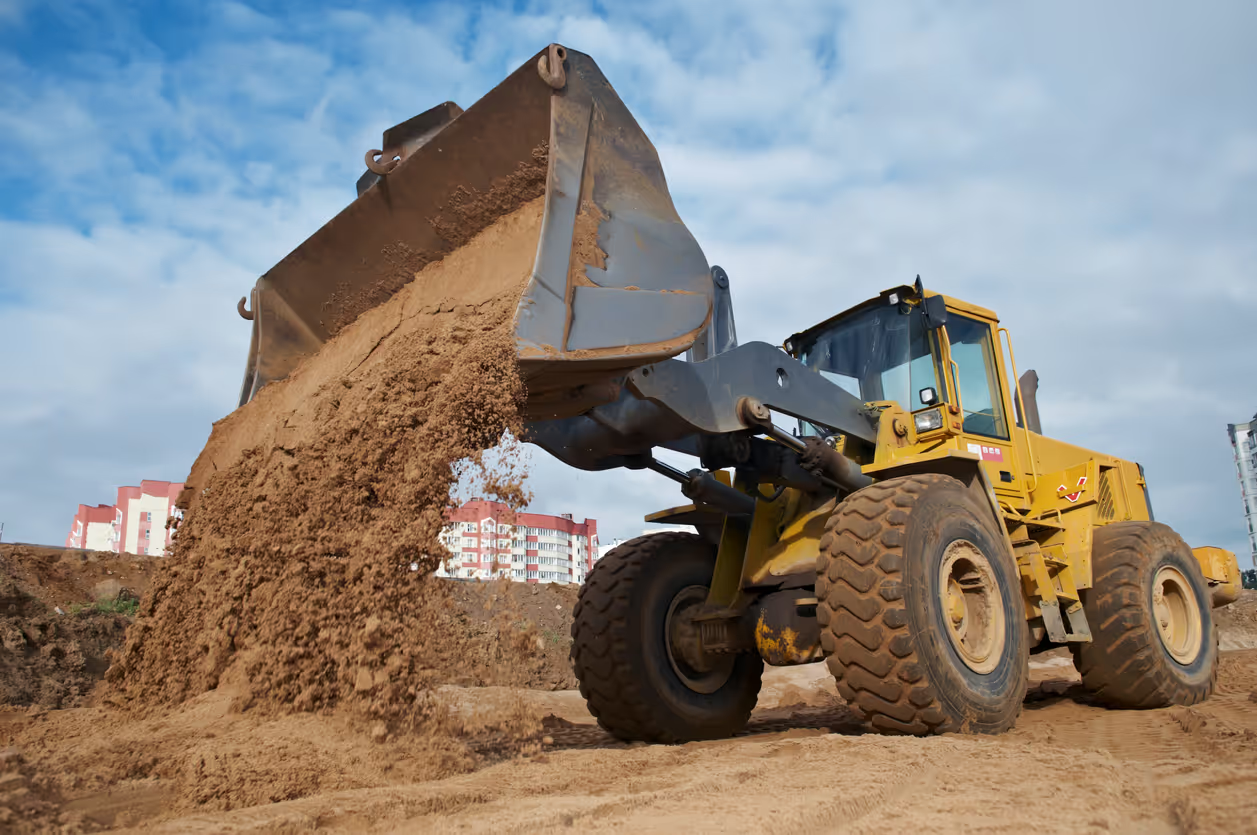
In California, red dye diesel sits inside two separate enforcement systems. The federal one runs through the IRS. The state one runs through the CDTFA. Both have authority to sample fuel. Both have penalty structures that stack on top of each other. Neither cares much about intent. This is the part of off-road diesel most operators learn the hard way, usually after an inspector has already shown up.
Quick Answer
Off-road diesel use in California is governed by two layers. Federal law (26 U.S.C. § 4082) makes red dye diesel tax-exempt for off-road equipment. California's Diesel Fuel Tax Law (Revenue and Taxation Code § 60050 et seq.) ties state excise tax liability to highway use. Inspectors at the IRS and CDTFA can sample fuel at storage tanks, dispensers, or vehicle tanks. Penalties stack across both jurisdictions.
| Jurisdiction | Agency | Statute | Penalty mechanism |
|---|---|---|---|
| Federal | IRS | 26 U.S.C. § 4082, § 6715 | Greater of $1,000 or $10/gal per violation, plus back-tax recovery |
| California state | CDTFA | Rev. & Tax. Code § 60050 et seq. (excise); § 60201 (penalties) | State excise tax recovery plus civil penalties |
The two enforcement systems that apply to your fuel
California operators run inside both a federal and a state fuel tax regime at the same time. Off-road diesel is exempt under both, but the exemptions are conditional, and the conditions are enforced separately.
The federal regime sits with the IRS. It defines what dyed diesel is, who can use it, what dye gets added at the terminal, and what happens when dyed fuel ends up where it's not supposed to be.
The state regime sits with the CDTFA, the California Department of Tax and Fee Administration. It collects California's diesel excise on clear fuel, defines highway use under state law, and brings its own penalty structure for misuse of tax-exempt fuel inside California.
These two systems don't replace each other. They run in parallel. An operator who violates the federal dye rule has also, in almost every realistic California scenario, violated the state excise rule. The bills come from both places.
The federal rule: 26 U.S.C. § 4082 and what it allows
Federal law makes diesel sold for non-highway use exempt from the federal motor fuel excise tax. That tax sits at 24.4 cents per gallon on clear diesel (24.3¢ statutory plus 0.1¢ for the Leaking Underground Storage Tank trust fund). The exemption is conditional on the fuel being dyed at the terminal with Solvent Red 164 before it leaves the rack.
Section 4082 spells out who can buy and use dyed diesel. The list is narrow:
- Off-road equipment that doesn't operate on public highways
- Stationary engines
- Certain commercial uses (intercity buses, school buses, state and local government use under specific conditions)
- Train and marine use under separate provisions
If dyed fuel ends up in any vehicle that operates on public highways, the penalty machinery in 26 U.S.C. § 6715 kicks in. First violation: the greater of $1,000 or $10 per gallon, calculated on the maximum fuel storage capacity of the vehicle's tank. Subsequent violations escalate. The IRS also recovers the unpaid federal excise tax on the fuel that was misused.
The federal penalty is not negotiable based on intent. It's a strict-liability provision. Inspectors don't have to prove the operator meant to cheat. They have to find dye in a tank that isn't allowed to carry it.
What California layers on top
California's Diesel Fuel Tax Law (Rev. & Tax. Code § 60050 et seq.) is administered by the CDTFA and runs on the same logical structure as the federal rule, with one important addition: California's state excise rate sits well above the federal rate. As of July 1, 2026, the California diesel excise is 48.2 cents per gallon, up from 46.6 cents the prior year. The rate adjusts every July 1, so verify the current figure with CDTFA before relying on it for any compliance calculation.
The statutory hook is § 60050, which defines diesel fuel for tax purposes, and § 60201, which sets out penalty provisions for false statements and misuse. The state's tax-exempt provision tracks the federal one: dyed fuel is exempt from the state excise when used in equipment that doesn't operate on public highways "of this state."
That language matters. California reads "operate on the highways" strictly. A vehicle that crosses a public road occasionally is operating on the highway for purposes of the tax. There's no de minimis exemption for "we just had to cross the road once." Highway use, under California's read, is binary.
A separate guide walks through California's specific penalty math, repeat-violation escalations, and how the state stacks its assessments on top of federal recovery. The short version: a single violation in California can produce a federal § 6715 penalty, the IRS's recovery of federal excise, the CDTFA's recovery of state excise, and a state civil penalty. The math adds up faster than most operators expect.
For the broader strategic picture, the full off-road diesel guide covers planning, storage, and supply rhythm. This piece focuses on the legal layer.
Where inspections actually happen
Most operators picture an inspection as a roadside traffic stop. That happens, but it's not the dominant pattern. CDTFA and IRS inspectors have authority to pull fuel samples in five places.
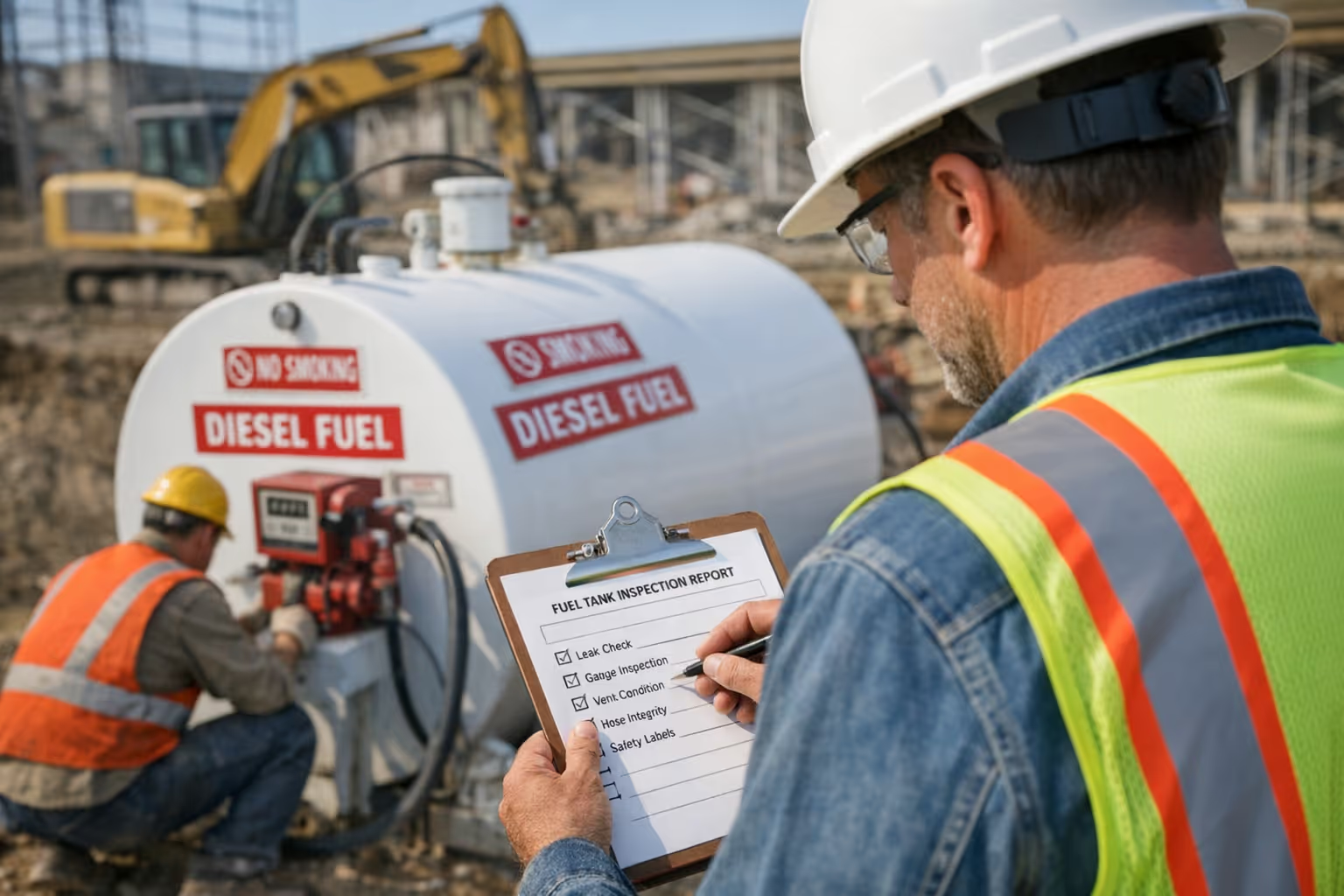
At the storage tank. An inspector can show up at a yard, farm, or job site and sample the tank directly. The sample identifies whether the right fuel is in the right tank. If a clear-labeled tank has dye in it, that's a documentation problem in addition to the fuel problem.
At the dispenser. The pump nozzle and the dispenser line carry residual fuel. A sample from the dispenser identifies whether dyed fuel has been moved through equipment that's supposed to handle clear, or vice versa.
At the vehicle. A field sample from a vehicle's fuel tank is the most common enforcement scenario. CDTFA inspectors and CHP officers can request a sample from any commercial vehicle. Once dye shows up, the enforcement path is well-defined.
At delivery. Inspectors occasionally observe deliveries directly. A delivery into the wrong tank, or a mislabeled storage container, can trigger an investigation that goes well beyond the single delivery.
In the records. Purchase records, fuel logs, and tax filings get pulled in audit-style reviews. A pattern where an operator buys large volumes of dyed fuel but has a highway fleet that should require clear is the kind of pattern that draws attention.
The common thread: inspections aren't scheduled, and they don't depend on a tip. The state and federal agencies operate sampling programs that look at where fuel is actually moving versus where the records say it should be.
What compliant operations look like in California
The operators who never end up in a CDTFA or IRS file have the same handful of habits. None of them are exotic.
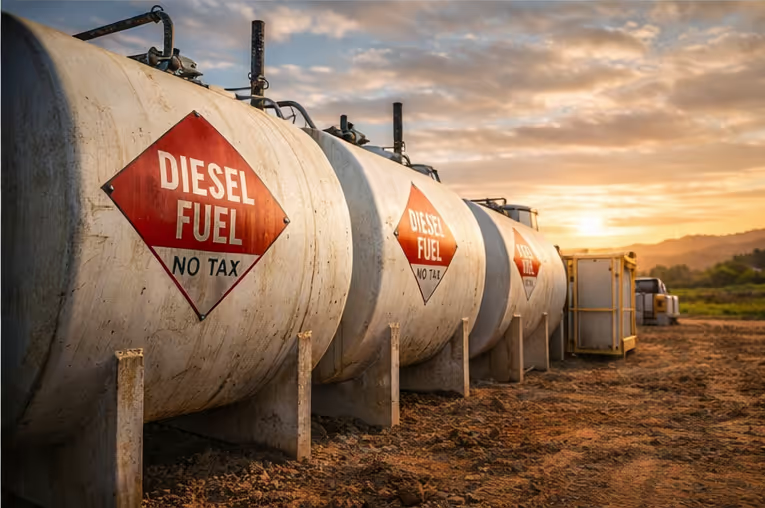
Storage gets separated. Dyed and clear sit in different tanks, with different labels, different pumps, and different colored nozzles. The physical separation does most of the work.
Records get kept. Fuel deliveries are logged, equipment fueling is logged, and tax filings reconcile to the logs. If an inspector pulls records, the records match what's in the tanks.
Internal SOPs are written and posted. New drivers and seasonal crew get trained on which fuel goes where, why the dye matters, and what to do if something gets confused. The SOP lives at the dispenser, not in a manual no one reads.
Mixed-use vehicles get a clear assignment. If a truck ever touches a public road, it never touches the red dye tank. The assignment is documented and built into the dispatch routine.
Supplier relationships do real work. Operations that manage both fuels cleanly typically work with a bulk fuel supplier that delivers each fuel on its own scheduled rhythm and sets up the storage and dispensing infrastructure to match. The supplier doesn't run the compliance program. The setup the supplier helps build is what makes the compliance program runnable.
Most compliance failures in California don't come from operators trying to game the system. They come from operators who never built the separation infrastructure in the first place, and who got caught the first time an inspector showed up while the team was moving fast.
Frequently Asked Questions
Who enforces off-road diesel laws in California?
Federal enforcement runs through the IRS under 26 U.S.C. § 4082 and § 6715. State enforcement runs through the CDTFA under Revenue and Taxation Code § 60050 et seq. Both have authority to sample fuel and issue penalties. The California Highway Patrol assists with roadside sampling and refers violations to CDTFA for assessment.
What's the penalty for using red dye diesel in a highway vehicle in California?
Federal penalty under § 6715 is the greater of $1,000 or $10 per gallon based on the vehicle's tank capacity, plus IRS recovery of the federal excise that should have been paid. California adds its own recovery of state excise tax (48.2 cents per gallon as of July 1, 2026, adjusted annually) plus civil penalties under Rev. & Tax. Code § 60201. The two penalty stacks run in parallel.
Can I use red dye diesel in a vehicle that occasionally drives on public roads?
No. California reads highway use as binary. A vehicle that crosses a public road for any purpose is considered to be operating on the highway. There is no exemption for "occasional" or "limited" road use. If the vehicle is licensed for highway operation, it requires clear fuel.
What records should I keep to demonstrate compliance?
Fuel delivery invoices showing which fuel type went into which tank. Equipment fueling logs showing what got fueled, when, how many gallons. Internal SOPs and training records showing crew has been instructed on fuel separation. Tax filings (federal Form 720 if applicable, California diesel use tax returns) that reconcile to the delivery and usage records. Retention guidance from CDTFA generally specifies four years; consult current CDTFA Publication 33 (Diesel Fuel Industry Guide) for the specific retention rule that applies to your operation.
What should I do if an inspector shows up?
Cooperate with the sample request, document who the inspector was and what was sampled, and pull the relevant fuel records to support the inspection. If a violation gets cited, the assessment process is administrative; consult a tax professional with California fuel tax experience before responding to a notice of determination. Do not refuse a sample request from a CDTFA or IRS inspector with field authority.
Have a fuel separation question for your California operation?
Most California operators running off-road and on-road fuel together have a setup that works most days. The day that matters is the one when an inspector shows up.
Call Windecker at (209) 826-5658 ext. 2 to walk through your storage, dispensing, delivery, and documentation setup with someone who works with California's fuel tax framework every day. Most inquiries get a response within one to two business days. The contact page works for written questions.


.png)