

Most California operators run on both fuels. The tractor and the harvester pull from the red dye tank. The truck that hauls them to the next site pulls from the clear pump. The fuel is the same diesel either way. The rules around it are not. This is where compliance gets blurry, and where most fuel violations actually start.
Quick Answer
Red dye diesel is tax-exempt diesel for off-road equipment. Clear diesel is the same fuel with federal and state road taxes included. The red color is there for enforcement, not engine performance. If a highway-licensed vehicle is running on dyed fuel, that's a tax violation. The fuel isn't the problem. The use is.
| Feature | Red Dye Diesel | Clear Diesel |
|---|---|---|
| Dye | Red (Solvent Red 164) | None |
| Federal road tax | Exempt | 24.4¢/gallon |
| California state diesel excise | Exempt | Applies (CDTFA-administered) |
| Legal use | Off-road equipment only | Highway-licensed vehicles |
| Engine performance | Identical to clear | Identical to dyed |
| Sulfur spec | ULSD (15 ppm) | ULSD (15 ppm) |
Same fuel, different rules
Both fuels meet the same federal Ultra-Low Sulfur Diesel standard. Same 15 parts per million sulfur cap. Same combustion. Same emissions profile. Drop either one into a compliant diesel engine and the engine doesn't care which version it's burning.
What changes between them is the tax stamp.
Red dye diesel is exempt from federal motor fuel excise under 26 U.S.C. § 4082. Clear diesel isn't. The federal rate sits at 24.4¢ per gallon, and California layers its own state excise on top through the CDTFA. Red dye skips both, which is most of why it costs less at the rack.
The dye itself does no chemical work. It's Solvent Red 164, added at the terminal before the fuel ever hits a truck. Its job is to make the fuel testable. Even when dyed fuel gets diluted with clear, the dye signature still shows up in standard inspection samples. That's the whole point of the enforcement model. Inspectors don't need to prove intent. They just need to find dye in a tank that isn't allowed to carry it.
The legal line is where the equipment runs
What makes a piece of equipment red-dye-eligible isn't the engine. It's where the equipment runs. Diesel engines all work the same way. Highways are the line.
Off-road eligible:
- Agricultural equipment (tractors, combines, harvesters, irrigation pumps)
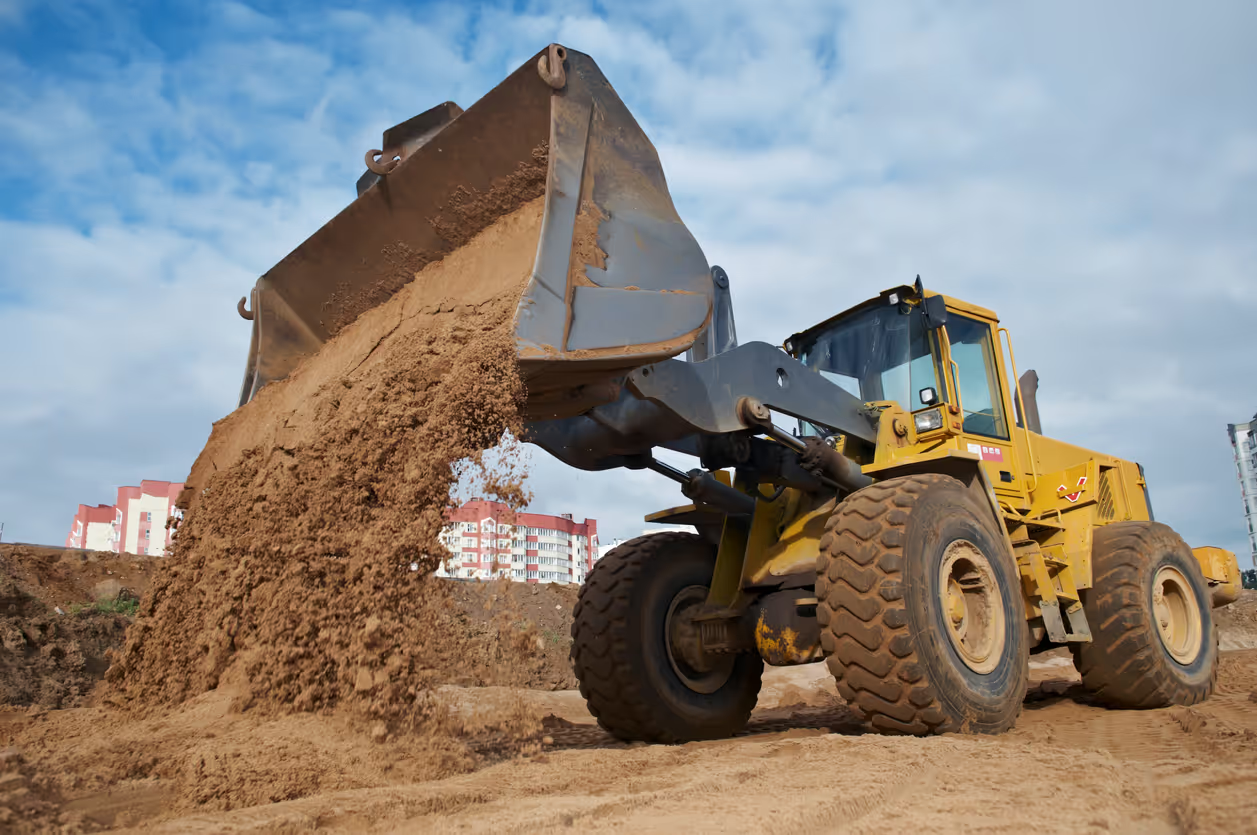
- Construction equipment (excavators, loaders, skid steers, dozers, job-site generators)
- Stationary engines (standby generators, refrigeration units, compressors)
- Marine vessels operating in coastal and inland waters
- Yard equipment confined to private property
Clear-required:
- Any vehicle licensed for highway use
- Fleet trucks, service vehicles, delivery vehicles
- Equipment haulers, even when they're hauling off-road machinery
California enforces this strictly. The state's Diesel Fuel Tax Law (Revenue and Taxation Code § 60050 et seq.) ties excise liability to fuel "used to propel a motor vehicle upon the highways of this state." Drive on a public road, owe the tax. Dye in the tank is evidence the tax never got paid. That's all the state has to prove.
For the operational side of off-road diesel (supply rhythm, tank sizing, planning around peak demand), the full off-road diesel guide covers that ground. This piece stays with the rules.
Where California operators get tripped up
Three gray areas catch most operators.
The first is mixed-use vehicles. A yard truck that runs on private property ninety-nine percent of the time still becomes a highway vehicle the moment it crosses onto a public road. If it's fueled from the red dye tank, that crossing is the violation. California doesn't grade on frequency. Highway use is binary.
The second is shared fuel storage. One tank used for both equipment and vehicles, even when the crew intends to keep dyed in the equipment side and clear in the trucks. Inspectors don't audit intent. They sample tanks, dispensers, and vehicle fuel separately. Cross-contamination shows up clean in the test.
The third is equipment transport. The excavator on the trailer is red-dye-eligible. The truck pulling the trailer is not. If a crew fuels both from the same dispenser on the way out of the yard, the truck is the violation point. The excavator's eligibility doesn't transfer to the vehicle hauling it.
Most violations look like one of those three. Inspectors at the federal level (IRS) and the state level (CDTFA) both have authority to pull samples from storage, dispensers, or vehicle tanks. Penalties stack across both jurisdictions. The math gets expensive fast.
A separate guide walks through California's specific penalty structure: federal excise recovery, state recovery, civil fines, per-gallon assessments. The legal exposure is the part most operators underestimate until it lands on them.
How experienced operations keep the two separated
The operations that run cleanly have the same handful of habits. None of them are clever. Most of them are physical.
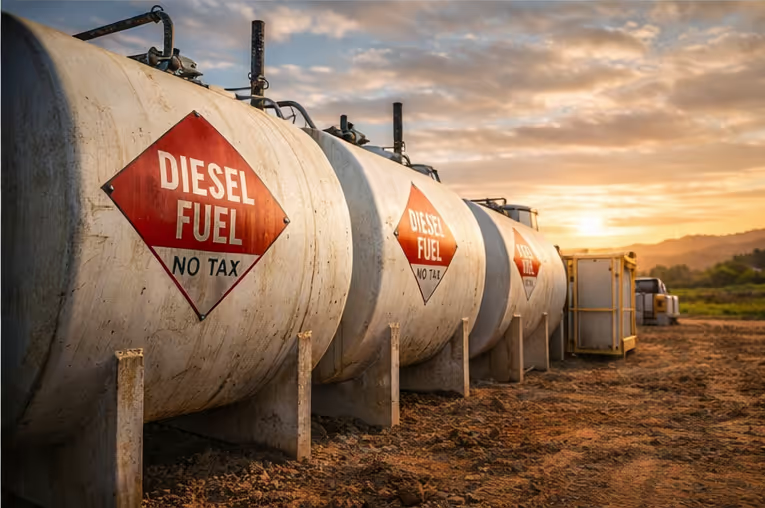
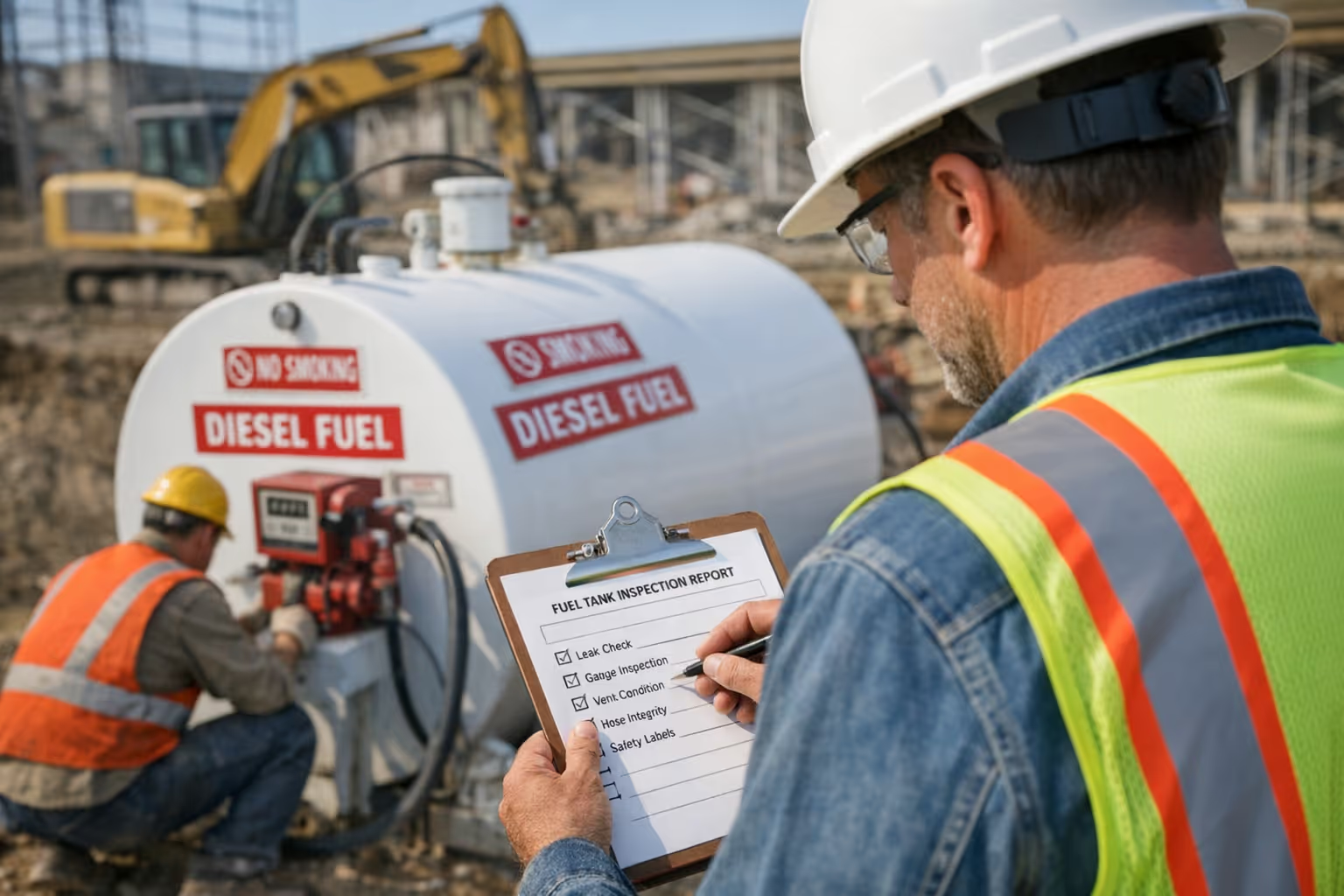
Separate storage tanks. Dedicated tanks for clear and dyed, no shared storage between the two. Tanks labeled by content, dispenser, and pump.
Color-coded dispensers. Red nozzle and handle for dyed, standard for clear. Drivers identify by feel and color, not by memory.
A written fueling SOP, posted at the dispenser, included in driver onboarding, refreshed annually. It spells out which equipment classes pull from which tank, and what to do when something feels off.
Documented usage logs. Who fueled what, when, how many gallons. The logs serve compliance, cost-per-machine tracking, and theft control at the same time.
A delivery rhythm aligned to consumption. Separate delivery schedules for each fuel type, sized so neither tank runs low enough that someone is tempted to top off from the wrong one.
Driver and equipment training that gets refreshed. Operators understand which class of fuel each piece of equipment takes, and why. The "why" is what holds the discipline together when the team turns over.
Most of these are structural. The cleanest operations don't lean on drivers remembering. They lean on the physical setup making the wrong choice harder than the right one.
That same structural discipline is where the bulk supplier relationship earns its place. Operations that manage both fuels cleanly typically work with a bulk fuel supplier that delivers each on its own scheduled rhythm, sets up storage to match equipment classes, and keeps the dispensing infrastructure consistent across sites.
When bulk delivery becomes a compliance tool
Manual fueling is the highest-risk model for misfueling. A driver runs to the public pump for clear, then to a cardlock for dyed, then back to the yard. Decisions get made fast. Mistakes stack up. Inspectors find the dye and the violation isn't a paperwork issue anymore.
Bulk delivery aligned to equipment class takes most of those decisions off the driver's plate. The right fuel shows up at the right tank, on a schedule that matches consumption, with dispensing infrastructure already set up to keep the two apart. The wrong choice at the dispenser gets harder to make because the setup doesn't put it in front of the driver.
That's where the compliance value of a real supplier relationship shows up. Not in marketing copy. In the storage tanks and the delivery schedule.
Frequently Asked Questions
Is red dye diesel lower quality than clear diesel?
No. Both fuels meet the federal Ultra-Low Sulfur Diesel standard of 15 parts per million sulfur. The difference is taxation, not fuel grade. Engine performance is identical in any compliant diesel engine.
Can you put red dye diesel in a truck?
Only if the truck operates exclusively on private property and never drives on public roads. If a vehicle is licensed for highway use, red dye diesel in its tank is a violation regardless of how rarely it touches the road. California treats highway eligibility as binary.
Why does red dye diesel cost less?
Because federal and state road taxes aren't added to it. The federal motor fuel excise on clear diesel is 24.4¢ per gallon. California layers its own state excise on top, administered by the CDTFA. Both taxes fund public road infrastructure. Off-road equipment doesn't use public roads, so the fuel that powers it isn't taxed for them.
How do inspectors detect red dye diesel?
Inspectors take a small fuel sample from the storage tank, the dispenser, or the vehicle's fuel tank. The dye (Solvent Red 164) is detectable at trace concentrations. Even when dyed fuel has been diluted with clear diesel, the dye signature remains visible to standard ASTM inspection tests.
What's the penalty for using red dye diesel in a highway vehicle in California?
Penalties stack across federal and state jurisdictions. Federal excise recovery, California state excise recovery, civil fines, and per-gallon assessments all apply. The specific penalty math is walked through in a separate guide on off-road diesel fines and penalties in California.
Need to walk through your fuel separation setup?
Most California operators running mixed fleets have a setup that mostly works. The real question is whether "mostly" is enough when an inspector shows up.
Call Windecker at (209) 826-5658 ext. 2 to walk through your storage, dispensing, and delivery setup with someone who works with these classifications every day. Most inquiries get a response within one to two business days. The contact page works for written questions.

.png)